
What is Social Media Marketing SMM? – Complete Beginner Guide
Social Media Marketing (SMM) is a powerful digital marketing strategy that uses social media platforms to promote brands, products, or services. It helps businesses connect with their audience, build relationships, and drive traffic, leads, and sales.
Today, billions of users are active on social media. That’s why businesses are using platforms like Facebook, Instagram, LinkedIn, and Twitter to reach their target audience effectively.
What is Social Media Marketing (SMM)?
Social Media Marketing (SMM) is a digital marketing method where businesses use social media platforms to promote their products, services, or brand.
It involves creating and sharing content such as posts, images, videos, and ads to connect with people, increase engagement, and achieve business goals like traffic, leads, and sales.
Why is Social Media Marketing Important?
1. Increases Brand Awareness
One of the biggest advantages of social media marketing is that it helps your brand reach a massive audience in a short time.
Every time you post content, it has the potential to be seen by thousands—or even millions—of users through shares, likes, and algorithms.
2. Builds Customer Relationships
Social media allows direct communication between businesses and customers, which was not possible in traditional marketing. You can reply to comments, answer messages, and interact with your audience in real time. This builds trust and makes your brand more human.
3. Cost-Effective Marketing
Compared to TV ads, newspapers, or billboards, social media marketing is much more affordable and accessible. You can start for free by posting content (organic marketing), and even paid ads can be run with a small budget.
4. Drives Traffic & Sales
Social media is one of the best ways to drive traffic to your website or landing pages. By adding links in your posts, bio, or ads, you can guide users directly to your product or service.
5. Targeted Advertising
Social media platforms offer advanced targeting options that allow you to reach the right audience based on demographics, interests, behavior, and location. This means your marketing efforts are not wasted on the wrong people.
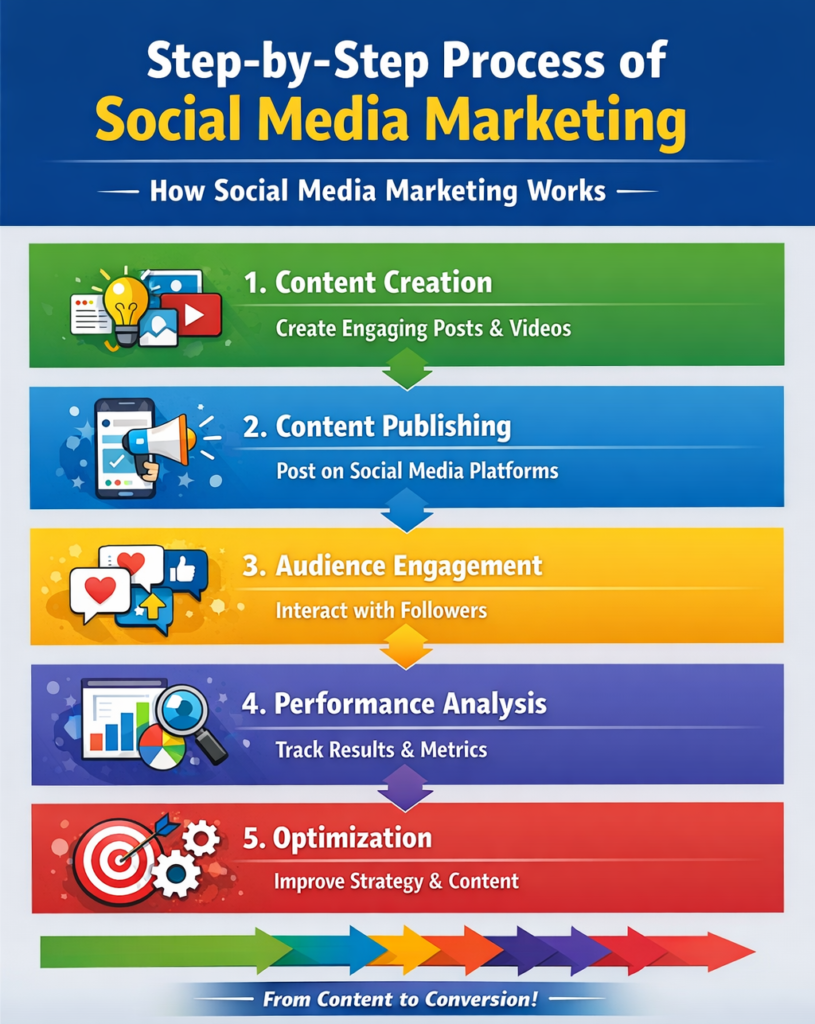
How Social Media Marketing Works?
Social Media Marketing (SMM) is not just about posting content randomly. It follows a structured process that helps businesses attract the right audience, engage with them, and convert them into customers.
Step-by-Step Process of Social Media Marketing:
Step 1: Content Creation
Everything in social media marketing starts with content.
Content is what attracts users and makes them stop scrolling. It can be:
- Images
- Videos
- Reels / Shorts
- Carousels
- Stories
Step 2: Content Publishing (Posting)
Once your content is ready, the next step is to publish it on the right platform.
Posting is not just uploading content—it includes:
- Choosing the right time
- Using proper captions
- Adding hashtags
- Optimizing for reach
Step 3: Audience Engagement
After posting, the real work begins—engagement.
Social media is a two-way communication platform. You need to:
- Reply to comments
- Answer messages
- Interact with followers
- Encourage discussions
Step 4: Performance Analysis
To grow faster, you must track your results.
This includes analyzing:
- Reach
- Likes, comments, shares
- Click-through rate (CTR)
- Conversions
Step 5: Optimization
The final step is optimization.
Based on your analysis, you improve your strategy:
- Create better content
- Change posting time
- Improve targeting
- Test new ideas
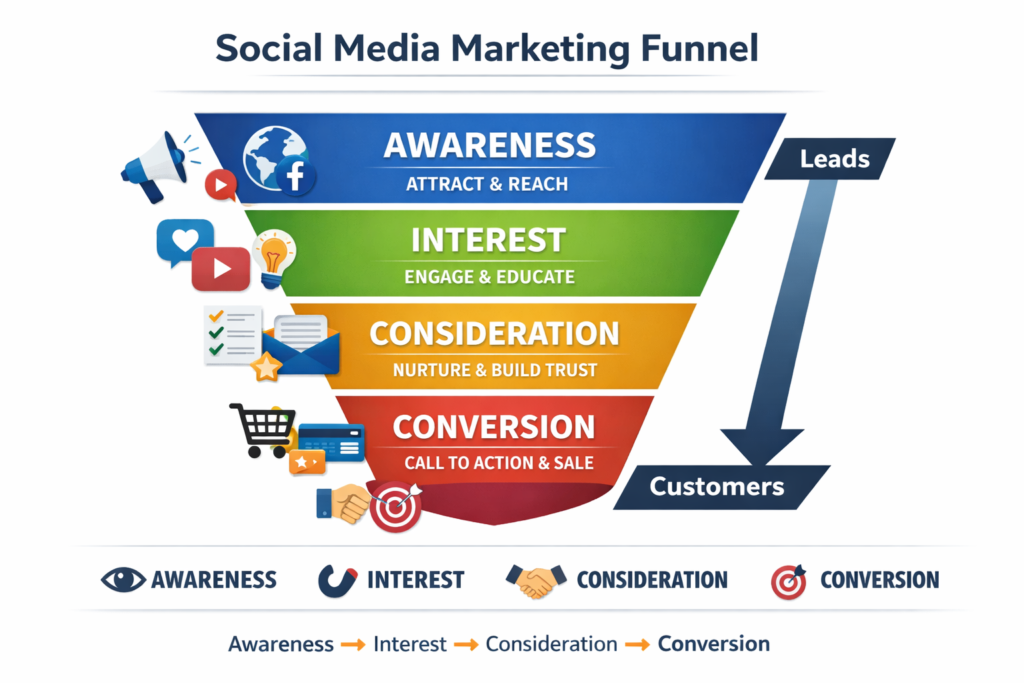
What are the stages of the social media marketing funnel?
The Social Media Marketing Funnel shows how users move from discovering your brand to becoming customers. It includes different stages like awareness, interest, consideration, and conversion. Each stage plays an important role in guiding the audience step-by-step. Now, let’s understand each stage in detail.
1. Awareness Stage
At this stage, people discover your brand for the first time.
How it works:
- Viral posts
- Reels
- Ads
- Shares
2. Interest Stage
Users start showing interest in your content.
How its work:
- Follow your page
- Like and comment
- Visit your profile
3. Engagement Stage
Now users actively interact with your brand.
User action:
- Engage with posts
- Watch your videos
- Respond to stories
4. Conversion Stage
This is the final stage where users take action.
user action:
- Click your link
- Sign up
- Buy your product/service

How Social Media Marketing Works (Example)
Step 1: Content Creation (Attract Audience)
You create a short Instagram reel like:
“5 SEO Tips to Rank Your Website on Google”
This type of content is valuable and attracts people who are interested in digital marketing.
Step 2: Posting & Reach
You post the reel with:
- Proper hashtags (#digitalmarketing, #seotips)
- Engaging caption
- Clear call-to-action (Follow for more tips)
Step 3: Engagement (Build Trust
People start:
- Liking your reel
- Commenting questions
- Following your page
You reply to comments and messages, which builds trust and connection.
Step 4: Consideration (Interest Builds)
Some users visit your profile and check:
- Your website
- Previous posts
- Course details
They start considering your product.
Step 5: Conversion (Action Taken)
Finally, users:
- Click your website link
- Sign up or buy your course
This is where followers turn into customers.
Social Media Marketing Advantages and Disadvantages
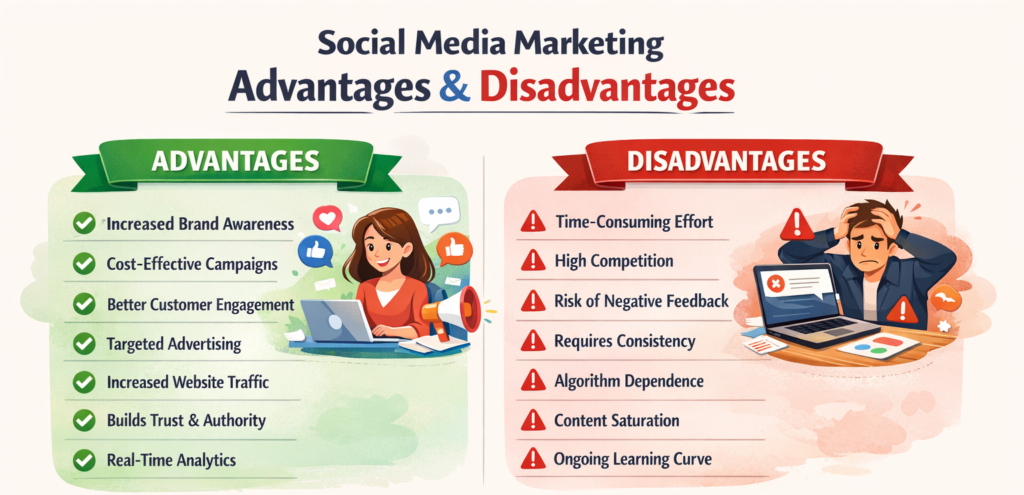
Advantages of Social Media Marketing
1. Increased Brand Awareness
One of the biggest advantages of social media marketing is its ability to make your brand visible to a large audience in a very short time. Platforms like Instagram, Facebook, and LinkedIn allow your content to reach not only your followers but also new users through shares, hashtags, and algorithms.
Even a single viral post can introduce your brand to thousands of potential customers. This makes social media a powerful tool for building recognition and online presence.
2. Cost-Effective Marketing
Social media marketing is one of the most affordable marketing methods available today. Unlike traditional advertising methods like TV, newspapers, or billboards, you can start promoting your business on social media with little to no cost.
Even paid advertising on social media is budget-friendly, allowing small businesses and startups to compete with larger brands. This makes SMM highly accessible for everyone.
3. Better Customer Engagement
Social media creates a direct communication channel between businesses and customers. You can interact with your audience through comments, messages, polls, and live sessions.
This interaction builds trust, improves relationships, and makes your brand feel more human. Engaged customers are more likely to stay loyal and recommend your brand to others.
4. Targeted Advertising
One of the most powerful features of social media marketing is advanced audience targeting. You can show your ads to specific groups of people based on their age, gender, location, interests, and online behavior.
This ensures your marketing efforts are focused on the right audience, increasing the chances of conversions and improving return on investment (ROI).
5. Increased Website Traffic and Sales
Social media platforms can drive a significant amount of traffic to your website or landing pages. By sharing links in posts, stories, and ads, you can guide users directly to your products or services.
With the right strategy, this traffic can turn into leads and sales, helping your business grow consistently.
6. Builds Brand Authority and Trust
When you regularly post valuable and informative content, your audience starts seeing you as an expert in your field. Over time, this builds credibility and trust.
A trusted brand has a higher chance of converting followers into paying customers.
7. Real-Time Performance Tracking
Social media platforms provide built-in analytics tools that allow you to track your performance in real time. You can monitor metrics like reach, engagement, clicks, and conversions.
Disadvantages of Social Media Marketing
1. Time-Consuming Process
Social media marketing requires consistent effort. You need to create content, post regularly, respond to comments, and analyze performance.
Without proper time management or a dedicated team, it can become overwhelming for businesses.
2. High Competition
Millions of businesses are using social media, which makes the competition extremely high. Standing out in a crowded market requires creativity, consistency, and a strong strategy.
Without unique content, your posts may get lost in the noise.
3. Negative Feedback and Public Criticism
Social media is an open platform where users can share their opinions freely. Negative comments, reviews, or complaints can be visible to everyone.
If not handled properly, it can damage your brand reputation. However, proper response strategies can turn this into an opportunity.
4. Requires Consistency and Patience
Social media marketing does not give instant results (especially organic growth). It requires continuous posting, engagement, and strategy improvement over time.
Many businesses quit early because they don’t see immediate results.
5. Algorithm Dependency
Social media platforms use algorithms to decide which content is shown to users. This means your content may not always reach your full audience.
Even with good content, reach can fluctuate due to algorithm changes.
Author
Jit Pal & Farhan khan
Founder of digitalmarketingblog.in